
Most founders start with tools. A content writer here, an email automator there, maybe a scheduling platform. Six months later, they have four subscriptions and workflows that don't talk to each other.
That's organized chaos with a monthly invoice, not a system.
An AI-powered marketing system is different. It includes the sequence, the integration, and the guidance that turns individual tools into something that compounds. Here are seven things to evaluate before you invest.
Quick Answer: An AI-powered marketing system connects lead capture, follow-up, conversion, and tracking into one workflow you own. The difference between a system and a pile of subscriptions is the sequence holding them together. Done-with-you means you build it inside your own CRM with expert guidance, then keep running it after the engagement ends.
Founders face a specific challenge when evaluating AI-powered marketing systems. You want efficiency and scale, but you also want to understand what you're building and why. We focused on the criteria that separate systems that deliver results from tools that collect dust.
Lean Marketing delivers a structured approach to building your in-house marketing department with done-with-you support. The Minimum Viable Marketing Engine installs six core pieces in a specific order: website copy, opt-in mechanism, CRM, welcome sequence, conversion system, and sales tracking.
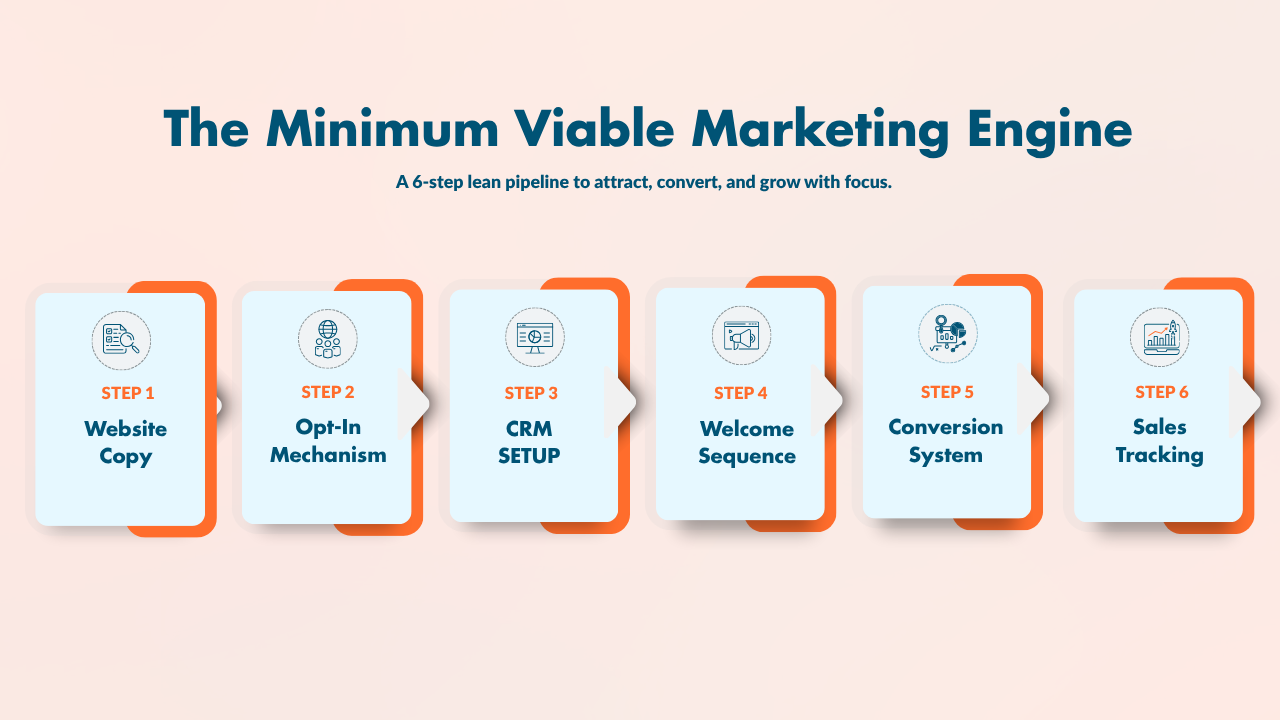
Built on the 1-Page Marketing Plan methodology trusted by over one million businesses, Lean Marketing focuses on message and offer first before moving to traffic. This sequencing prevents the most common founder mistake: paying for leads that go nowhere because the conversion system wasn't ready.
The coaching model means you build everything inside your own tools. When the engagement ends, you keep the system, the data, and the ability to run it yourself.
Lean Marketing benefits
Pros:
Cons:
Most founders start their AI marketing journey by buying individual tools. A content generator, a social scheduler, an email automation platform. Six months later, they have multiple subscriptions and fragmented workflows that don't connect.
An AI-powered marketing system differs from standalone tools because it includes the sequence and integration strategy that makes each tool produce results. The system tells you which tool to use when, how to connect the data between platforms, and what numbers indicate success. Without that sequence, you're running random acts of marketing faster.
AI tools vs AI systems
Pros:
Cons:
The done-with-you model sits between pure self-service and full agency delegation. You get expert guidance on what to build and in what order, while your team handles the actual installation inside your own tools.
This matters for founders because it builds internal capability. When the coaching engagement ends, you understand how every piece of your marketing system works. You can troubleshoot issues, train new team members, and adapt the system as your business changes.
Done-with-you benefits
Pros:
Cons:
Most founders want to start with lead generation. Traffic, leads, sales conversations happening immediately. That instinct makes sense. New business feels like progress.
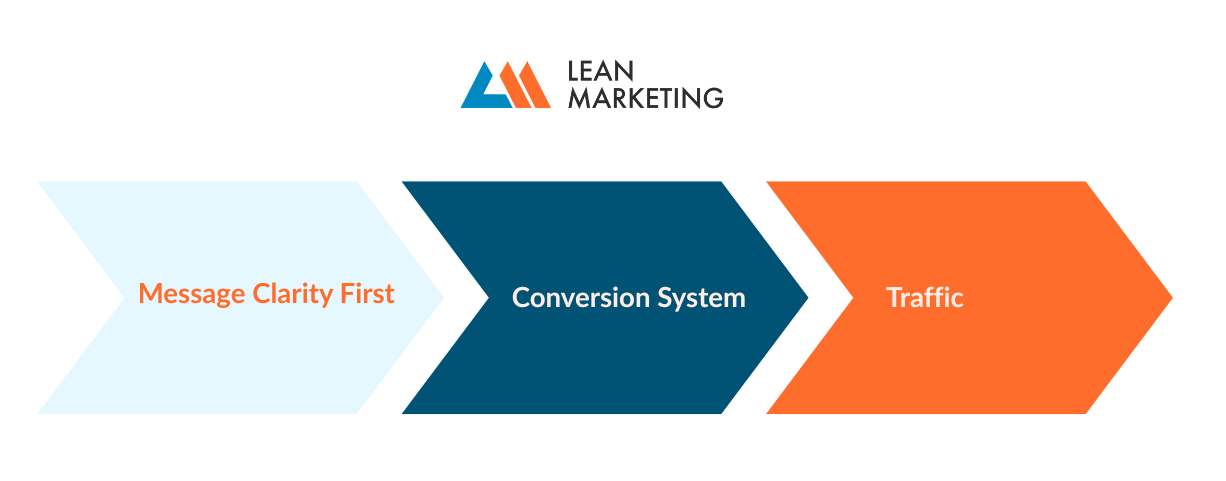
The problem is that running traffic to a broken funnel creates expensive data about how broken your funnel is. The right sequence starts with message and offer, moves to conversion and nurture, then adds traffic last. Fix the bucket before you fill it.
Why sequence determines success:
Pros:
Cons:
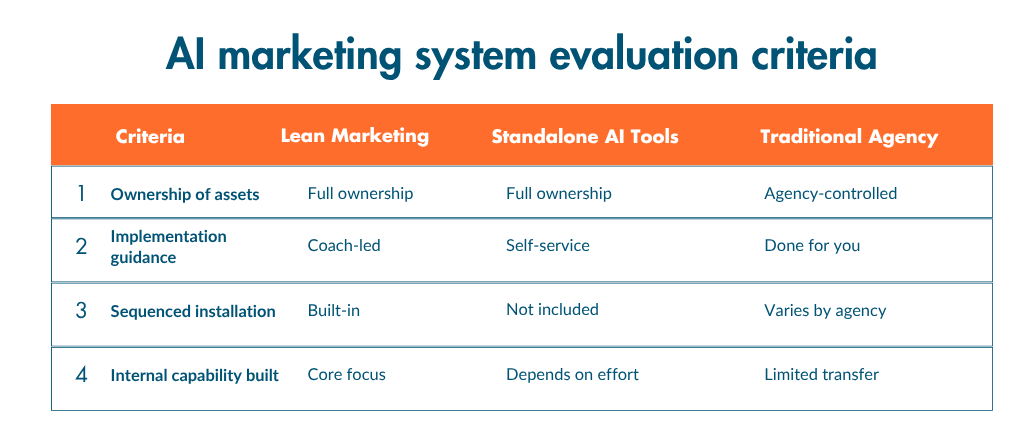
Many marketing vendors build campaigns inside their own platforms using their own accounts. When the relationship ends, you lose access to your email lists, automation sequences, and performance data.
A done-with-you marketing system installs everything inside your tools. Your CRM, your email platform, your analytics dashboard. The vendor guides the installation, but you hold the keys.
Ownership model benefits
Pros:
Cons:
An AI content tool that doesn't connect to your publishing workflow creates extra manual steps. A lead scoring tool that doesn't talk to your CRM requires double data entry. Each disconnected tool adds friction that makes consistent execution less likely.
When evaluating AI-powered marketing systems, ask how data flows between components. The best systems connect your content creation, distribution, lead capture, and follow-up sequences into a single workflow.
Integration benefits
Pros:
Cons:
Founders who build marketing through experimentation typically spend years working out what produces results. They test tactics, abandon approaches that don't work, and gradually piece together a functional system through expensive trial and error.
A proven marketing path compresses that timeline. Instead of discovering the right sequence yourself, you follow something that has already worked for thousands of similar businesses. The mistakes have already been made. You don't have to repeat them.
Benefits of a proven path
Pros:
Cons:
Start with your biggest constraint, not the longest feature list. Most founders who buy AI tools without a clear installation plan end up with expensive subscriptions they rarely use.
Work out the single bottleneck costing your business the most right now. Is it inconsistent follow-up? Unclear messaging? No system for capturing leads who aren't ready to buy immediately? Choose AI marketing automation that addresses that gap first.
Then check whether the platform connects to your existing tools. An AI email writer that doesn't integrate with your email platform creates extra steps that reduce how likely you are to use it consistently.
Most founders wait too long because they think they need a larger team or more revenue first. In practice, a few signals tell you you're ready now rather than later.
If you're managing multiple marketing channels without clear processes, you're ready. If leads come in but follow-up happens inconsistently, you're ready. If you've tried agencies and ended up paying for work you didn't own, you're ready.
A simple diagnostic: if you stepped away from marketing for two weeks, would anything ship? If the answer is no, you need a system that runs without depending entirely on you.
The Lean Marketing approach works for founders who:
Lean Marketing addresses the full challenge founders face, not just one piece. You get the methodology (the 1-Page Marketing Plan), the sequence (message first, conversion second, traffic last), and the guidance (a coach who has run their own business).
The done-with-you model means you understand every component of your marketing system when the engagement ends. You're not dependent on a vendor to keep things running. Your team can operate it, troubleshoot it, and build on it independently.
Lean Marketing also integrates AI tools within a proven installation sequence rather than expecting you to work out how the pieces fit together. The AI and CRM tools inside the Accelerator help you create content and automate follow-up that sounds like your brand, not generic output.
For founder-led businesses that want to build real marketing capability rather than rent temporary campaigns, Lean Marketing offers the most direct path to a system you actually own.
A done-with-you AI marketing system pairs proven AI tools with a coach who guides you through installation. The system is built inside your own CRM, website, and email platform, so you keep everything when the engagement ends. You get expert direction without losing ownership of your marketing infrastructure.
Most core pieces can be running within weeks when you follow the right sequence. The bottleneck is rarely time. Lean Marketing focuses on message and offer first, then conversion and nurture, then traffic. Businesses that follow this order often see results faster than those who try to build everything at once.
In most cases, no. AI tools amplify whatever you point them at. Without a clear sequence, they amplify the wrong activities faster. Get your conversion and follow-up working first, then add AI tools to accelerate execution once you know what to execute.
When you hire an agency, they build campaigns in their tools using their accounts. When the contract ends, marketing often stops. Lean Marketing installs the system in your tools with your team, so the capability stays with your business. You're building an asset, not renting a service.
Budget varies by business stage. For the Lean Marketing Accelerator, plan for the program investment, a team member dedicated to marketing implementation, and ongoing marketing expenses. The Accelerator is $12,000 for the four-month build, or four payments of $3,500. The investment pays back faster than most agency retainers because you own the system when it's complete.
Lean Marketing works particularly well for founder-led service businesses at six or seven figures in revenue. The methodology applies to professional services, trades, and e-commerce. The installation sequence adapts to your specific business while maintaining the proven order that prevents wasted marketing spend.
The CRM is the hub. Lead capture, follow-up sequences, conversion tracking, and reporting all run through it. An AI-powered marketing system either integrates with your existing CRM or installs one as part of the build. Without CRM integration, the tools stay disconnected and the data stays fragmented.
With done-with-you support, the system stays with you. It lives in your tools, your accounts, and your data. Your team knows how to run it because they built it alongside the coach. You can keep building on it, hand it to a new hire, or bring in a specialist to add to it. The capability belongs to your business, not the vendor.
If you're managing multiple marketing channels without clear processes, or you've paid agencies for work that stopped when the contract did, there's a cleaner path. One where you own every piece, you can see what's working, and your team runs the machine.
Step 1: Book a call and complete the short MRO diagnostic.
Step 2: We'll review your numbers and show you where growth is likely leaking.
Step 3: If it's a fit, we'll map your first 30 days and start building your Lean Business System.
Guessing is expensive. Systems are cheaper.
You'll get new articles delivered straight to your inbox, plus special subscriber-only content such as podcasts, videos and live training events.

Just tell us where to send yours below. We respect your email inbox and will never spam.
Get free weekly emails that make you smarter at marketing and help you grow your business