
The AI marketing market in 2026 is full of “good” work that doesn’t make people feel anything.
Scroll LinkedIn for five minutes and you’ll see it.
Perfectly structured posts. Clean hook. Neat bullet points. Polished CTA. Zero personality.
It reads like someone ran “write a high-performing marketing post” through a machine — because they did.
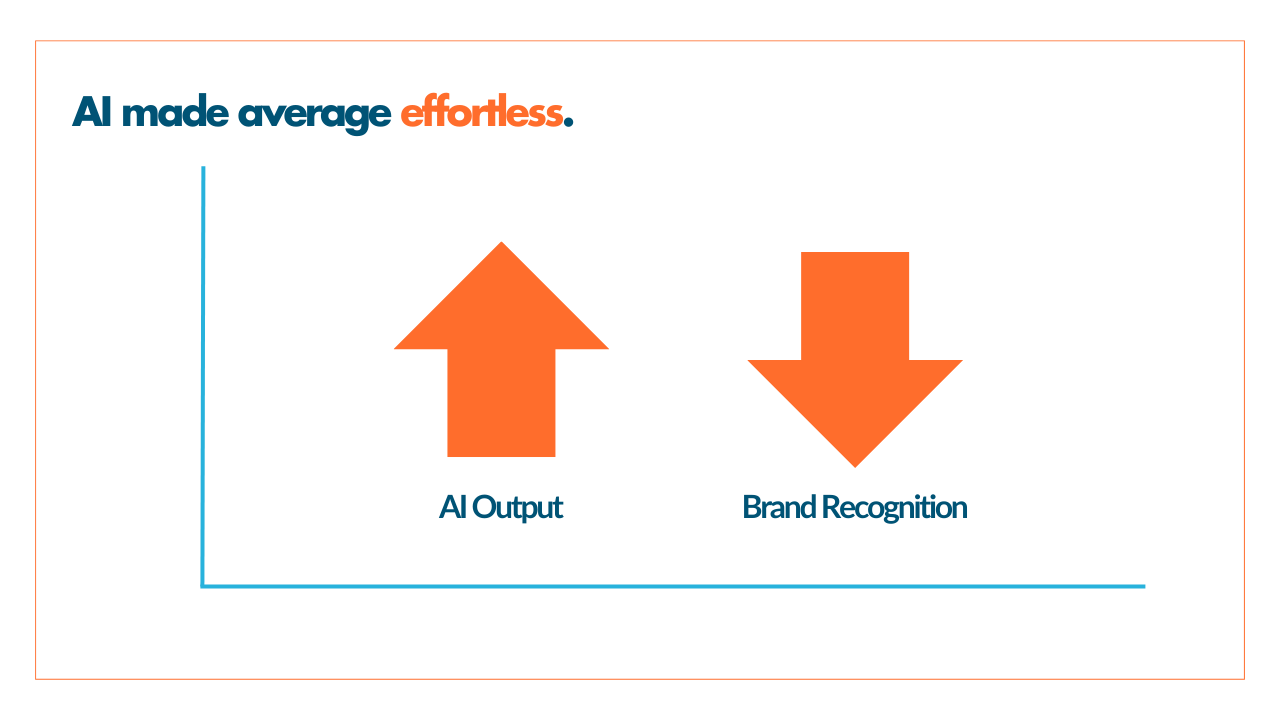
AI hasn’t made marketing harder because artificial intelligence is “taking over.” It’s made marketing harder because it’s made average effortless.
The barrier to creating marketing assets has collapsed, which means the market is flooded with work that looks finished but feels empty.
And customers are noticing. A recent study from SmythOS revealed something marketers need to pay attention to: only 38% of consumers share positive sentiment toward AI, compared to 77% of advertisers who view AI in a positive light. That's not a small gap. That's a trust crisis hiding in plain sight.
And that creates a real problem for AI marketing in 2026.
The businesses who win won’t be the ones producing the most marketing output.
They’ll be the ones using AI with enough judgement that their marketing still feels like it came from a real human with a point of view.
Over the past year, I’ve had a series of conversations with people who sit right at the edge of this shift. Each sees the same issue from a different angle, and together it paints a clear picture of how AI marketing needs to evolve in 2026.
Here’s the playbook.
The most dangerous kind of marketing in 2026 isn't bad.
Bad stands out. It's easy to ignore.
The dangerous work is generated creative that looks correct, performs fine on paper, and disappears from memory seconds later. It's clean. It's competent. It carries no identity.
That's why AI marketing in 2026 isn't a format issue. It's a signal issue.
When marketers rely on the same tools trained on the same corpus, output converges. Hooks repeat. Phrases recycle. Structure becomes predictable. Even work written "by humans" starts sounding machine-smoothed. You can see this across campaigns, ads, and landing pages. Brands push out more volume, more iterations, more assets — and their marketing gets quieter.
Remember that SmythOS study I mentioned? It gets worse. 52% of consumers report reduced engagement with content they believe is AI-generated. On social media, where trust matters most, 62% of consumers are less likely to engage with or trust content if they know it's AI-generated.
This isn't a minor preference. This is a trust problem becoming a revenue problem.
In 2026, the goal isn't to create more marketing. It's to create marketing customers recognize immediately as yours.
When I spoke with Dain Walker on the Agency Podcast, he described the shift in a way that stuck with me.
AI is compressing the time it takes to ship decent work. That sounds like a win — until you see what it does to the market.
The middle disappears.
What used to be valuable because it was “good enough” becomes cheap. And the response from many marketing teams is predictable: produce more. More posts. More emails. More ads. More variations. Output increases. Differentiation collapses.
The advantage in AI marketing in 2026 is selection.
Taste. Judgement. Standards.
AI makes it easy to generate ten ideas. The skill is knowing which nine should never ship. That’s the correct way to use AI-powered features next year:
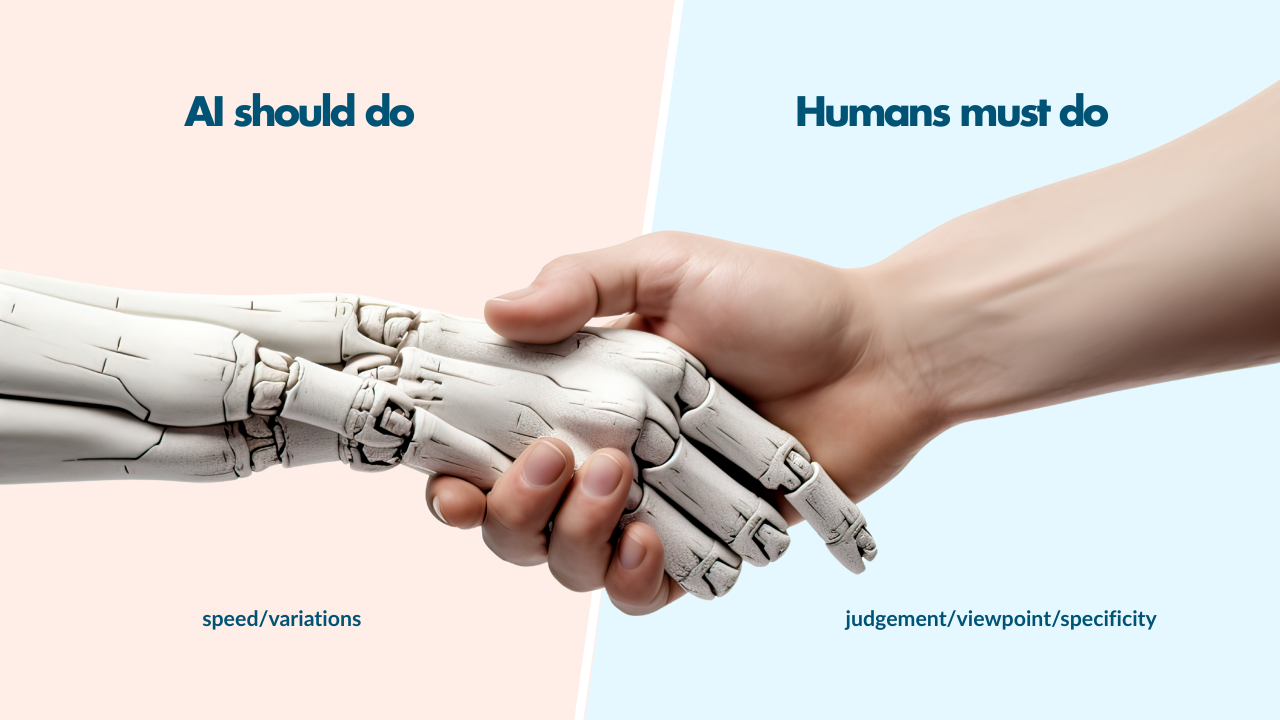
AI should help you explore angles faster, compress research, structure messy notes, rewrite drafts in different tones, and spin variations for testing.
Then humans do the part that creates separation: the viewpoint, the examples, the specificity, the proof, and the edits that carry real authority.
If your AI usage stops at “generate content,” your marketing will blend into the background.
One of the most practical takeaways from my conversation with automation expert Carl Taylor was how much value gets lost because teams treat conversations as temporary.
Customer calls. Sales objections. Podcast interviews. DMs. Voice notes. Workshop discussions.
These aren’t soft insights. They’re first-party data.
In AI marketing in 2026, the teams that win will have a repeatable data strategy that turns customer data into marketing assets without starting from zero each time.
Here’s what that workflow looks like.
Step one is capture. Record calls. Save transcripts. Store notes. This is basic data hygiene. (My team uses Fathom to record and extract valuable takeaways from every conversation with clients and prospects.)
Step two is extraction. Identify repeated language, emotional moments, resistance points, and decision triggers. This is where AI, machine learning, and data science quietly do their best work.
Step three is deployment. One real conversation can become an email, an ad angle, a landing page section, a sales enablement line, or a webinar segment.
AI speeds this up. It doesn’t replace the voice of the customer.
That distinction matters.
When I spoke with copywriter Daniel Throssell on the Lean Marketing Podcast, we kept circling the same truth.
The copy that performs isn’t impressive.
It’s believable.
AI makes it easy to sand down language until it looks polished, balanced, and safe. And safe is exactly what gets ignored.
If a line could belong on any website in your industry, it’s already costing you conversions.
This is where judgement matters more than technology.
Daniel’s work has always been grounded, specific, and direct. He doesn’t rely on abstraction. The examples do the work. The language sounds like someone who’s actually done the job.
That’s the standard AI marketing in 2026 demands.
AI tools are everywhere now. That part isn’t interesting anymore.
What matters is what happens after the initial excitement wears off — when you’re left figuring out how to keep output high without turning your brand into a template.
That friction doesn’t show up in draft generation. It shows up later — tightening messaging, maintaining consistency, avoiding repetition, and protecting standards as speed increases.
That’s the gap Lean Intelligence is designed to address.
Lean Intelligence is our AI platform inside the Lean Marketing Accelerator. It acts as the operating system underneath execution, allowing marketing teams to move faster without flattening identity. It’s only available inside the Accelerator because it’s tied directly to the same framework used by over one million businesses through the 1-Page Marketing Plan.
Unlike generic AI technology trained on the internet, Lean Intelligence is trained on your business — your language, your messaging, your positioning, and your customer conversations.
The outcome isn’t more marketing volume.
It’s better execution at speed, without brand erosion.
With Lean Intelligence, you can:
When you equip yourself with the right AI tools to systemize your marketing, that’s when you streamline and amplify your results. So you can create content that actually sounds like you wrote it, and ship on-brand content in hours, not weeks.
That’s the leverage.
Check out our live demo of Lean Intelligence for more details on how it works and can apply to your business.
If you want to make this practical, don’t start by creating more content.
Start by building a simple weekly loop.
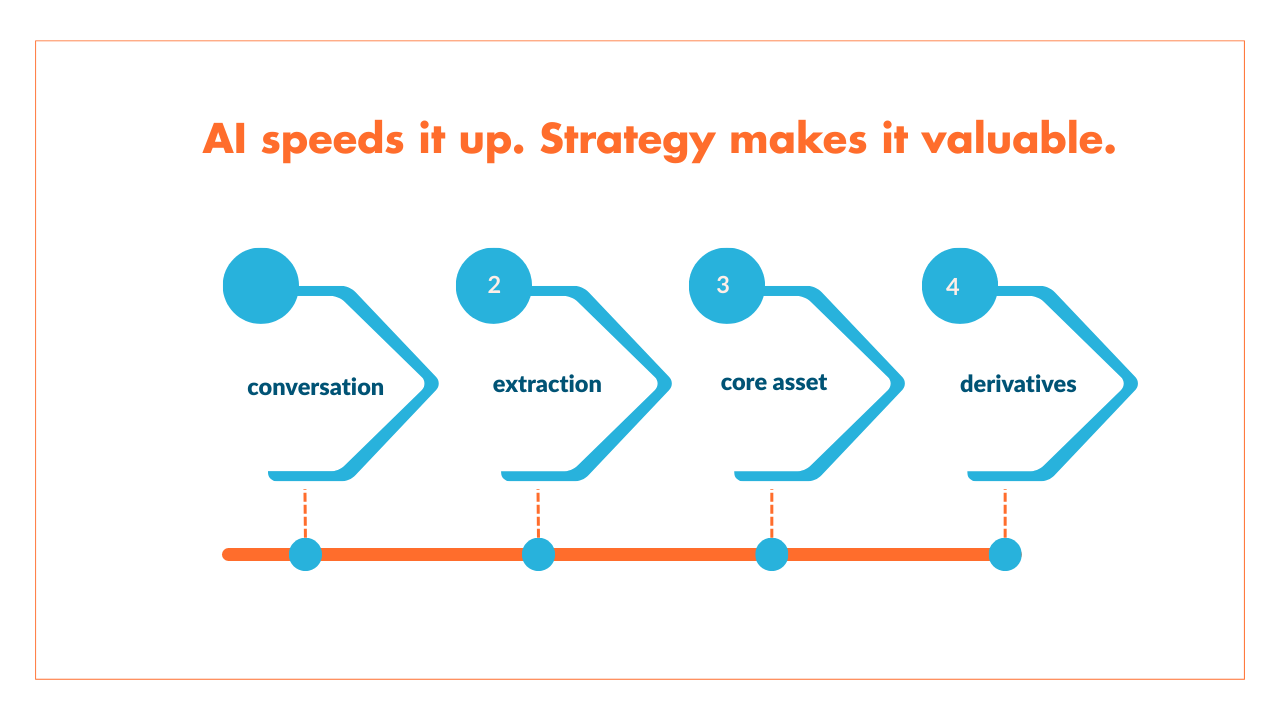
One conversation. One extraction session. One core asset. Five derivatives.
That structure compounds insight, improves attribution, and keeps quality high without burnout.
AI makes the workflow faster. Strategy makes it valuable.
AI marketing in 2026 will reward marketers who keep their personality, sharpen judgement, and build systems that turn real insight into repeatable assets.
The opportunity isn’t hidden. It’s sitting right in front of you every time a customer says, “I wasn’t sure this would work, but…”
That’s your marketing.
Capture it. Shape it. Deploy it.
And let everyone else keep publishing work that looks perfect and disappears on contact.
If you want to see how Lean Marketing Accelerator + Lean Intelligence helps you create faster without sounding generic, book a call and we’ll walk you through it.
You'll get new articles delivered straight to your inbox, plus special subscriber-only content such as podcasts, videos and live training events.

Get free weekly emails that make you smarter at marketing and help you grow your business